Afghanistan Visa for Tourists: How to Get One, Step by Step
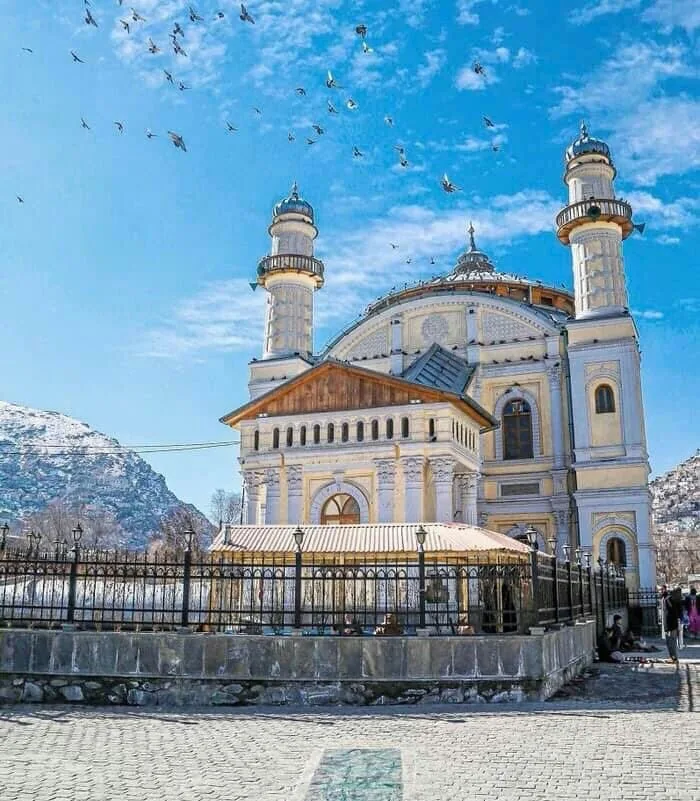
Afghanistan changed how tourist visas work in March 2026: there is now an official online e-Visa, so for most travelers the passport never has to leave home. The embassy route still exists and still matters for some nationalities and entry points. Here is how both work, and what we prepare for you either way.
Yes, you need a visa. Since March 2026 most tourists can apply online through Afghanistan's official e-Visa portal (eAfghans). It costs about $130 in total, usually arrives by email as a PDF within a few working days, and is a single-entry visa for stays of up to 30 days. Inside the country you also need provincial travel permits, which we arrange.
Can you get an Afghanistan visa online in 2026?
Afghanistan opened its e-Visa portal (eAfghans) in March 2026 — the first time tourists could apply for entry entirely online. You complete the form, upload a passport scan and a photo, pay online, and the visa arrives by email as a PDF, usually within a few working days and sometimes within 24 hours. As it stands it is a single-entry tourist visa, good for a stay of up to 30 days, that has to be used within 90 days of being issued, and it is accepted for arrivals at Kabul International Airport. If you plan to enter overland, apply at an embassy instead. These rules are new and still moving, so check the current position with us before you book flights.
How do you apply for the e-Visa, step by step?
- Tell us your travel dates and route so we can confirm what your nationality needs — the answer differs for overland entry and for a handful of passports.
- Create an application on the official eAfghans portal and fill in your personal and travel details.
- Upload your documents: the passport photo page, a passport-style photograph, and your itinerary or invitation letter where one is asked for.
- Pay online. At the time of writing the total comes to roughly $130 — a small portal fee when you submit, and the visa fee itself once the application is approved.
- Your e-Visa arrives by email as a PDF. Send us a copy, print one for the airport, and we finalize your arrival plan.
What documents do you need to upload?
You need a passport valid for at least six months with blank pages, a clear scan of its photo page, a recent passport-style photo, your itinerary and our invitation letter, and a card that works for international online payments.
- Passport valid at least 6 months beyond your travel dates, with blank pages
- A clear scan or photo of the passport information page
- A recent passport-style photograph
- Your tour itinerary, plus an invitation letter from a registered Afghan tour operator — no longer demanded in every case, but it is what makes an application read as ordinary, and we issue one for every guest
- A payment card that works for international online payments
When should you apply at an embassy instead?
The embassy route still applies if you are entering overland, if the portal will not take your nationality, or if you would rather have the visa in the passport. You apply at an Afghan embassy or consulate outside Afghanistan. Travelers most often use the missions in Dubai or Abu Dhabi (UAE), Islamabad or Peshawar (Pakistan), Doha (Qatar), Istanbul (Türkiye), or Tashkent (Uzbekistan) — but many capitals have an Afghan mission. Requirements and fees differ from one embassy to another, so once you tell us where you will apply, we tailor the paperwork to that embassy's checklist.
Where are Afghanistan's embassies, and which ones can give you a visa?
Afghan embassies and consulates run from Kabul issue visas that are accepted on arrival. They are in Pakistan, Iran, Türkiye, the Gulf, Central Asia, Russia, China, India, Bangladesh, Malaysia and Indonesia. Visas from the missions in London, Paris, Brussels, Rome and the other places listed below are not accepted. From any country you can also apply online.
Swipe the map sideways to see Europe and East Asia.
- Visa accepted
- Ask us first
- Not accepted or closed
Where you can apply: visas accepted on arrival
- Pakistan: Islamabad; consulates in Peshawar, Karachi and Quetta
- Iran: Tehran; consulate in Mashhad
- Türkiye: Ankara; consulate general in Istanbul
- United Arab Emirates: Abu Dhabi; consulate in Dubai
- Qatar: Doha
- Saudi Arabia: Riyadh; consulate in Jeddah
- Oman: Muscat
- Uzbekistan: Tashkent; consulate in Termez
- Turkmenistan: Ashgabat
- Kazakhstan: Astana
- Kyrgyzstan: Bishkek
- Russia: Moscow
- China: Beijing
- India: New Delhi; consulates in Mumbai and Hyderabad
- Bangladesh: Dhaka
- Malaysia: Kuala Lumpur
- Indonesia: Jakarta
Ask us before you apply at these
- Germany (Berlin, Bonn) and Norway (Oslo): both were on Kabul's 2024 list of missions whose papers it would not accept. Staff appointed from Kabul have worked there since 2025 and 2026, mostly for Afghans living in those countries.
- Kuwait and Azerbaijan (Baku): reported to be run from Kabul, but not yet confirmed.
- Tajikistan: the embassy in Dushanbe is still run by the former government's diplomats; the consulate in Khorog is run from Kabul.
Visas not accepted, or the embassy has closed
In July 2024 Kabul said it would no longer accept passports or visas from the Afghan missions in the United Kingdom, France, Belgium, Switzerland, Austria, Italy, Greece, Poland, Sweden, Canada and Australia (the list also named Germany and Norway). The embassies in the United States (2022) and Japan (January 2026) have closed, and the embassy in Australia said it would close at the end of June 2026. If you live in one of these countries, use the e-Visa, or get a visa at one of the missions above on your way: many travellers get theirs in Dubai, Istanbul or Islamabad.
Going to an Afghan embassy is an ordinary visit to a visa counter: you hand in the form, your passport and photos, pay the fee, and collect the visa when it is ready, which takes longer at some embassies than others. If you are flying to Kabul you need not go at all: the e-Visa is done online. Tell us the city where you will apply, and we will confirm the mission is open and send you its checklist and our invitation letter.
Should you get the e-Visa or an embassy visa?
If you are flying into Kabul, the e-Visa is usually easier: about $130 in total, issued by email within a few working days. Choose an embassy visa if you are entering overland or the portal does not take your nationality; fees and times differ by embassy, so allow three to four weeks.
| What you need to know | Online e-Visa | Embassy visa |
|---|---|---|
| Where you apply | Online, on the official eAfghans portal | At an Afghan embassy or consulate abroad, such as Dubai, Islamabad, Doha, Istanbul or Tashkent |
| Cost | About $130 in total: $8–$10 in portal fees plus a visa fee of about $120 | Depends on nationality and embassy, commonly $80–$200 |
| Time to issue | Usually a few working days, sometimes within 24 hours | Differs by embassy; allow three to four weeks |
| What you get | A single-entry tourist visa by email (PDF): stays of up to 30 days, used within 90 days of issue | A visa in your passport, on the embassy's terms |
| Where you can enter | Kabul International Airport only | By air or overland |
| Best for | Most travelers flying into Kabul | Overland arrivals, passports the portal does not accept, and anyone who wants the visa in the passport |
How much does an Afghanistan visa cost, and how long does it take?
The e-Visa costs about $130 in total at the time of writing — roughly $8–$10 in portal fees plus a visa fee of around $120 — paid online in two stages. Embassy fees vary by nationality and mission and commonly land between $80 and $200. Either way, allow three to four weeks before departure: the e-Visa is usually the quicker of the two, but approval times move around. The visa fee is paid by you directly and is not included in tour package prices.
Do you need travel permits after you land?
A visa gets you into the country; provincial travel permits get you around it. Foreign visitors need a travel letter from the Ministry of Information and Culture in Kabul naming the provinces they will stay in — about 1,000 AFN (roughly $12) per province — and then register with the provincial Information and Culture department on arrival in each one. This is the part travelers most often underestimate, and it is handled for you on every tour we run.
What are the most common visa mistakes?
- Passport with less than 6 months' validity left, or no blank pages. Check this before you pay for anything.
- Expecting the e-Visa to work at a land border. It is valid for entry at Kabul International Airport only; overland arrivals need an embassy visa.
- Applying late. Allow three to four weeks before departure; approval times move around.
- Forgetting the provincial permits. The visa gets you into the country; the travel letter and the registration in each province are separate, and we arrange them.
- Assuming the visa fee is part of the tour price. You pay it directly; visa support and the invitation letter are included.
What do we handle for you?
We write the invitation letter with your name, dates and route, send a document checklist for the portal or the embassy you use, answer any verification call or email, and handle the airport pick-up, provincial permits and registration stops.
- Invitation/support letter naming you, your dates, and your route
- A document checklist matched to your route and to where you are applying — portal or embassy
- Answers to any verification call or email the embassy or the ministry sends us
- Airport pick-up, the provincial permits, and the registration stops, so your paperwork stays in order for the whole trip
Visa support is included in every tour package and also available as a separate service. Tell us your nationality and where you plan to apply on WhatsApp, and we will reply with the exact checklist for that embassy. Wondering what a trip costs? See our tour packages and prices.
Sources: Ministry of Foreign Affairs of Afghanistan: entry visa; eAfghans e-Visa portal. Visa rules change often, so check with us before you book flights.
Questions about the Afghanistan visa
Can I get an Afghanistan visa online?
Yes. Afghanistan opened an official e-Visa portal (eAfghans) in March 2026, and tourists can now apply entirely online: complete the form, upload a passport scan and photo, pay online, and receive the visa by email as a PDF, usually within a few working days. It is issued as a single-entry tourist visa for a stay of up to 30 days, must be used within 90 days of issue, and is accepted for arrivals at Kabul International Airport. Travelers entering overland still apply at an Afghan embassy.
Do tourists need a visa to visit Afghanistan?
Yes. Almost all foreign nationals need a visa before traveling to Afghanistan. Since March 2026 most tourists get it through the online e-Visa portal; an Afghan embassy or consulate abroad remains the route for overland entry and for nationalities the portal does not cover. Tourist visas are typically single-entry and valid for a stay of around 30 days.
Which Afghan embassies can issue a visa that is accepted?
Those run by the Ministry of Foreign Affairs in Kabul: the embassies and consulates in Pakistan, Iran, Türkiye, the United Arab Emirates, Qatar, Saudi Arabia, Oman, Uzbekistan, Turkmenistan, Kazakhstan, Kyrgyzstan, Russia, China, India, Bangladesh, Malaysia and Indonesia. Missions change often, so send us the city where you plan to apply and we will confirm it is open and issuing tourist visas.
Is a visa from the Afghan embassy in London accepted?
No. The Afghan embassy in London closed in 2023, and in July 2024 Kabul said it would no longer accept visas or passports from the Afghan missions in the United Kingdom, France, Belgium, Switzerland, Austria, Italy, Greece, Poland, Sweden, Canada and Australia. Travellers living in these countries use the e-Visa, or apply at a mission run from Kabul on the way, such as Dubai, Istanbul or Islamabad.
How much does an Afghanistan tourist visa cost?
The e-Visa costs roughly $130 in total — about $8 to $10 in portal fees plus a visa fee of around $120 — paid online in two stages. Embassy fees vary by nationality and mission and commonly fall between $80 and $200. The visa fee is paid by the traveler directly and is not included in tour package prices.
Do I need an invitation letter for an Afghanistan visa?
It is no longer required in every case: travelers have completed e-Visa applications without one. It is still asked for at many embassies, and it is what makes an application read as ordinary and well-supported. Al Hamid Tour and Travel issues an invitation letter for its guests as part of every tour package, confirming the itinerary and that a registered local company is hosting the traveler.
Do I need travel permits inside Afghanistan?
Yes. A visa covers entry; moving between provinces needs a travel letter from the Ministry of Information and Culture in Kabul naming the provinces you will stay in, at about 1,000 AFN (roughly $12) per province. You then register with the provincial Information and Culture department on arrival in each one. Al Hamid Tour and Travel arranges the permits and the registration stops on every tour.
Can tourists travel independently in Afghanistan?
In practice almost no visitor travels alone. Moving between provinces needs a travel letter naming the provinces you will stay in, you register with the provincial department in each one, and there are checkpoints on the main roads, so visitors use a licensed operator or a registered local guide. The bigger obstacles are outside the country: most governments advise against all travel to Afghanistan, and that can invalidate travel insurance. Entry rules have changed recently and may change again, so confirm them with us before you apply. Our tours include the guide, driver, permits and registration.
Planning a trip? Talk to our Kabul team — we reply fast on WhatsApp.
Plan My Trip