Mazar-e-Sharif Guide: The Blue Mosque & the North
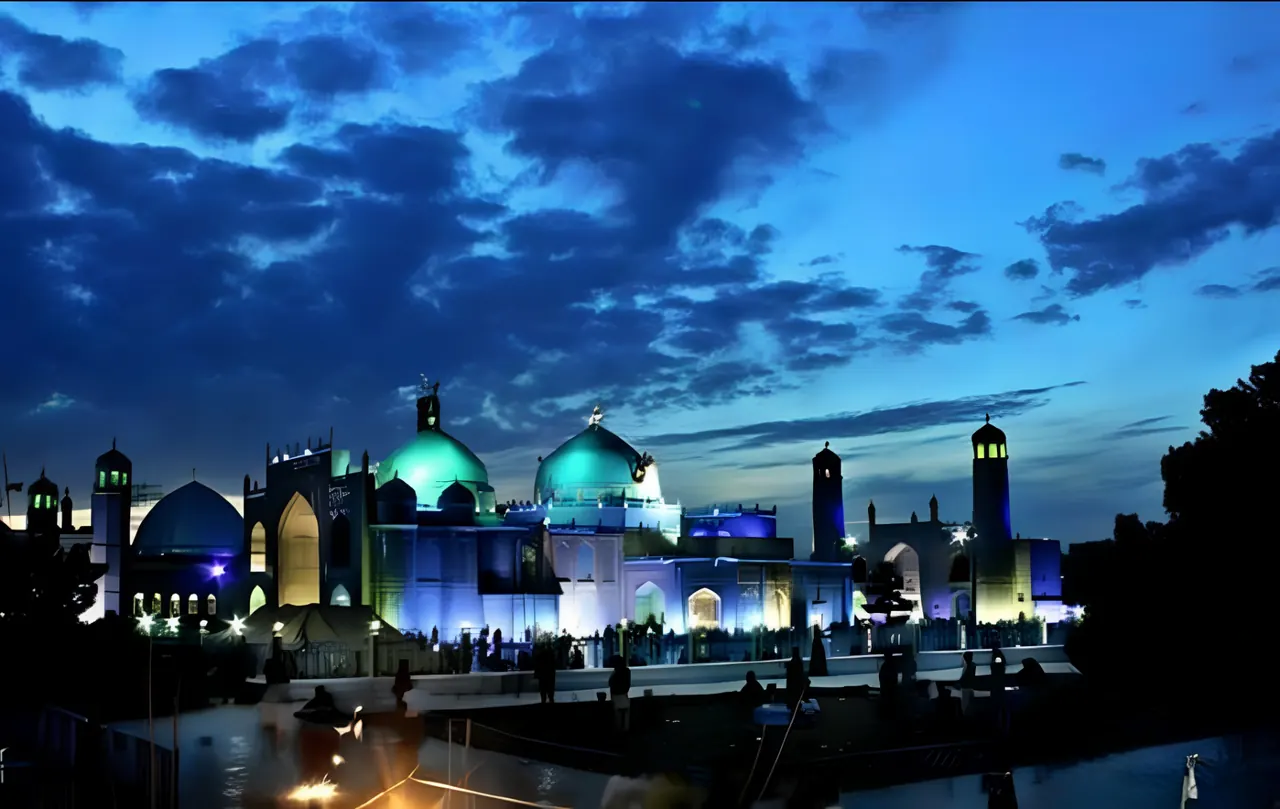
Mazar-e-Sharif, the great city of the north, is built around one of the most beautiful buildings in the whole country — the Blue Mosque, its tilework glowing turquoise against the sky and its courtyard alive with white doves. Capital of Balkh province and a crossroads of cultures, "Mazar" has an easygoing warmth all its own. Here is what to see and how to plan a visit.
Mazar-e-Sharif, capital of Balkh province in the north, is famous for the Blue Mosque (the Shrine of Hazrat Ali), with its turquoise tiles and white doves; the ancient city of Balkh is nearby. It is about an hour's flight from Kabul, or a drive over the Salang Pass. Spring and autumn are best for sightseeing, and from late October to about March is the buzkashi season, starting with the first game on Friday 23 October 2026.
What is the Blue Mosque (Shrine of Hazrat Ali)?
The Blue Mosque — the Shrine of Hazrat Ali — is the heart of the city and its most unforgettable sight. Wrapped in intricate blue and turquoise tiles, it sits in a vast marble courtyard where flocks of famous white pigeons gather. It is a living place of pilgrimage, busiest and most beautiful in the soft light of early morning and evening. Visitors are welcome in the courtyard; your guide will advise on dress and etiquette so your visit is respectful and relaxed.
What does Mazar-e-Sharif mean?
Mazar-e-Sharif means "the noble shrine", after the shrine at its centre, which many Afghans believe holds the tomb of Ali, the cousin and son-in-law of the Prophet Muhammad. The city grew up around the shrine from the 15th century, while nearby Balkh, the far older city, declined.
What else is there to see in Mazar-e-Sharif?
- The lively bazaars around the shrine, selling carpets, chapan coats, and northern crafts.
- The ancient city of Balkh nearby — one of the oldest cities in the world, the "Mother of Cities."
- The shrine of Rabia Balkhi and other historic sites in the surrounding plains.
- Everyday life in the courtyard: tea, families, and the white doves that are said never to lose their color.
- Takht-e Rostam, a Buddhist stupa and monastery carved into the rock near Aybak in Samangan, about two hours away by road.
- The Green Mosque in Balkh. The 15th-century shrine of Khwaja Abu Nasr Parsa, with its ribbed turquoise dome, in the centre of old Balkh.
- Noh Gonbad. The "Nine Domes" mosque near Balkh, from the 8th or 9th century and one of the oldest Islamic buildings in Afghanistan. Its domes have fallen, but its carved stucco columns and arches still stand.
How do you get to Mazar-e-Sharif?
The easiest way from Kabul is a domestic flight of about an hour, which we book as part of your trip. Overland, the route crosses the Salang Pass and tunnel through the Hindu Kush — a dramatic drive in good weather. Once in the city we provide a private vehicle and an English-speaking guide. Mazar pairs naturally with the ancient ruins of Balkh close by.
How far is Mazar-e-Sharif from Kabul?
About 420 km by road over the Salang Pass, a full day's drive of seven to nine hours depending on traffic and the tunnel, or about an hour by plane.
Why visit Balkh?
Balkh, about 20 km west of Mazar, was one of the great cities of the ancient world, called "the Mother of Cities". Its huge mud-brick walls still stand, and the poet Rumi, known in Afghanistan as Mawlana Balkhi, is traditionally said to have been born there in 1207. Half a day is enough for the walls, the Green Mosque, the tomb of Rabia Balkhi and Noh Gonbad.
When is the best time to visit Mazar-e-Sharif, and when can you see buzkashi?
Spring and autumn are the most pleasant seasons; the northern plains get very hot in high summer. From late October to about March (the first game of the 2026–27 season is on Friday 23 October 2026), Mazar-e-Sharif is the easiest place in Afghanistan to watch buzkashi, the national horseback game, usually played on Fridays; our Buzkashi Season Tour is timed for one. Nowruz, the Persian new year around 21 March, used to bring huge crowds to the Blue Mosque for the raising of the ceremonial banner. Since 2022 it has not been an official holiday and the celebrations have been much smaller, so ask us what is planned before building a trip around it.
What should you know before visiting Mazar-e-Sharif?
Dress modestly at the shrine and follow your guide on etiquette, go early in the morning or at sunset for calm and good light, ask before photographing people, and carry some afghanis in cash for the bazaar and tea.
- Dress modestly at the shrine; your guide will advise on covering and etiquette.
- Early morning and sunset are the best times for photos and a calmer atmosphere.
- Always ask before photographing people, especially at the shrine.
- Carry some cash in afghanis for the bazaar, tea, and small purchases.
Mazar-e-Sharif and Balkh make a wonderful northern leg of an Afghanistan trip. Tell us your dates on WhatsApp and we'll plan the flights, guide, and route. See our Afghanistan tour prices, how to get around Afghanistan, or the best time to visit guide.
Questions about visiting Mazar-e-Sharif
What is Mazar-e-Sharif famous for?
Mazar-e-Sharif is famous for the Blue Mosque, also known as the Shrine of Hazrat Ali — one of the most beautiful buildings in Afghanistan, covered in blue tilework and surrounded by white doves. It is the capital of Balkh province in the north, the home of buzkashi, Afghanistan's national horseback game, and was long the centre of the country's Nowruz (new year) celebrations.
How do you get to Mazar-e-Sharif?
The quickest way from Kabul is a domestic flight of about an hour. It can also be reached overland via the Salang Pass and tunnel through the Hindu Kush. We arrange flights, a private vehicle, and an English-speaking guide.
When is the best time to visit Mazar-e-Sharif?
Spring and autumn are the most comfortable for sightseeing. From late October to about March the city holds buzkashi games, usually on Fridays; the first game of the 2026–27 season is on Friday 23 October 2026. Nowruz (around 21 March) used to draw large crowds to the Blue Mosque, but since 2022 the celebrations have been much smaller. Summers can be very hot on the northern plains.
What is the Blue Mosque in Mazar-e-Sharif?
The Blue Mosque, also called the Shrine of Hazrat Ali, is the heart of Mazar-e-Sharif (also written Mazar-i-Sharif). It is wrapped in blue and turquoise tiles and stands in a large marble courtyard where flocks of white pigeons gather. It is a living place of pilgrimage. Visitors are welcome in the courtyard, and your guide will advise on dress and etiquette.
What does Mazar-e-Sharif mean?
It means "the noble shrine", after the Blue Mosque at its centre, which many Afghans believe holds the tomb of Ali, the cousin and son-in-law of the Prophet Muhammad.
How far is Mazar-e-Sharif from Kabul?
About 420 km by road over the Salang Pass, a drive of seven to nine hours, or about an hour by plane.
What is there to see in Balkh?
Balkh, about 20 km west of Mazar-e-Sharif, has its huge ancient mud-brick walls, the 15th-century Green Mosque of Khwaja Abu Nasr Parsa, the tomb of the poet Rabia Balkhi and, nearby, Noh Gonbad, one of the oldest mosques in Afghanistan. Half a day is enough.
When does the buzkashi season start in 2026?
In Mazar-e-Sharif the first game of the 2026–27 season is on Friday 23 October 2026. Games then follow on most Fridays until about March, as long as the weather allows.
Mazar-e-Sharif and Balkh tours and prices
Planning a trip? Talk to our Kabul team — we reply fast on WhatsApp.
Plan My Trip