Minaret of Jam Guide: How to Visit Afghanistan's UNESCO Minaret
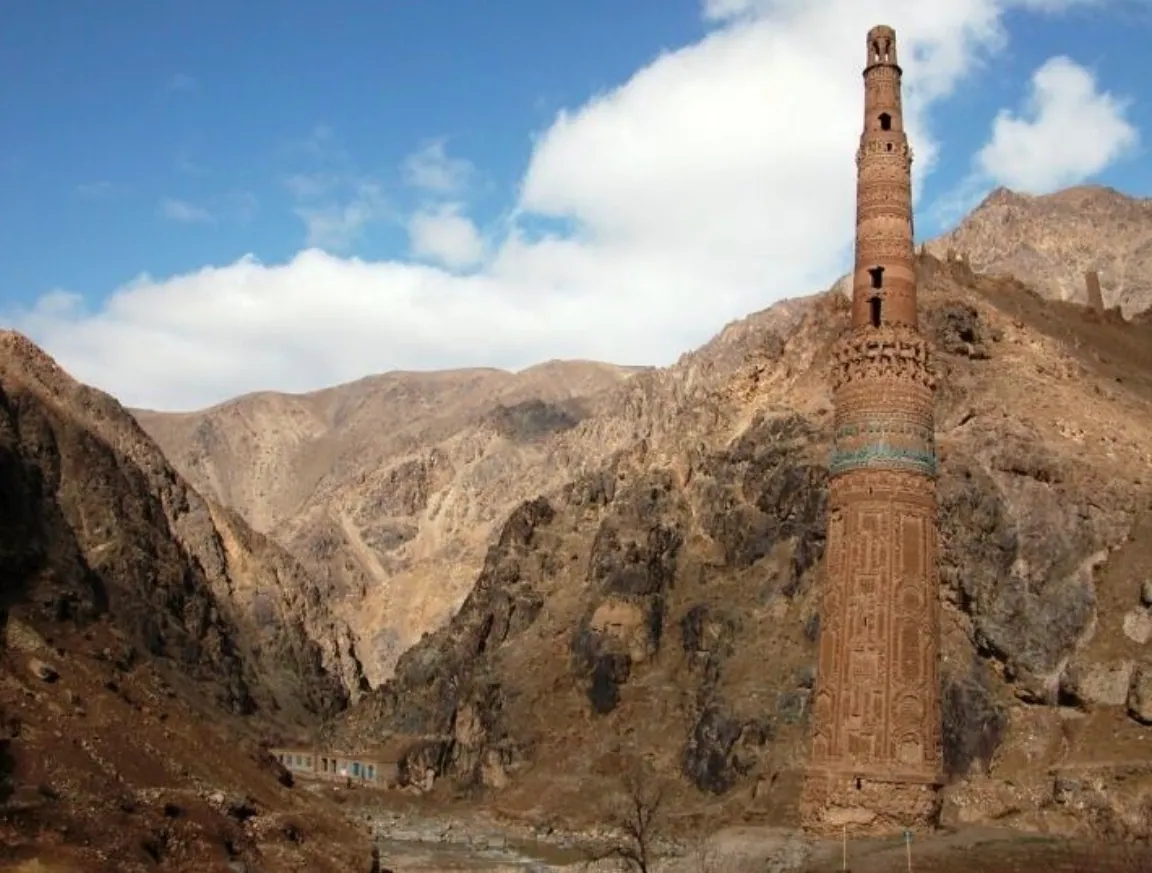
Deep in the mountains of Ghor, in central-west Afghanistan, a 65-metre brick tower stands alone at the bottom of a gorge. The Minaret of Jam has stood there since the 12th century, and it is one of the most remarkable, and least visited, monuments in Asia.
The Minaret of Jam is a 65-metre brick minaret built around 1194 in Ghor province, Afghanistan, and was the country's first UNESCO World Heritage Site. It can only be reached by road, on long 4x4 drives from Kabul or Herat, from about May to October. Plan at least four days; seven is typical.
What is the Minaret of Jam?
It is a tall, tapering tower of baked brick, built for the Ghurid sultan Ghiyath al-Din Muhammad. It is covered in geometric brick patterns and bands of Kufic calligraphy, including a chapter of the Qur'an (Surah Maryam), with glazed turquoise tile near the top. At 65 metres it is the second-tallest historic brick minaret in the world, after the Qutb Minar in Delhi, which it is thought to have inspired.
What to see at Jam
- The minaret itself. Walk around its base to see the brick patterns and calligraphy change with the light.
- The river setting. It stands where the Jam River meets the Hari River, in a narrow gorge between steep mountains.
- The archaeological remains. The slopes around it hold traces of a medieval town that was probably Firozkoh, the lost capital of the Ghurids.
- The road there. The drive through the central highlands, past villages and high passes, is part of the experience.
History of the Minaret of Jam
In the 12th century the Ghurids ruled an empire from these mountains that stretched from eastern Iran into northern India. The minaret was built around 1194 and was almost unknown outside Afghanistan until archaeologists brought it to the world's attention in 1957. In 2002 it became Afghanistan's first UNESCO World Heritage Site, and it is on UNESCO's List of World Heritage in Danger because of erosion, floods and earthquakes.
How to get to the Minaret of Jam
There is no airport nearby, so every visit is by road. From Kabul the route runs west through Bamyan and the central highlands; from Herat it follows the Hari River east through Chisht-e Sharif. Either way it means long days on rough mountain roads in a 4x4, and you cannot get there and back from Herat or Kabul in one day. Floods can damage the roads and bridges, so the route is checked before every trip.
Best time to visit the Minaret of Jam
The roads are usually passable from about May to October. Late spring and early autumn are the most comfortable: in winter snow closes the high passes, and in spring melting snow can flood the rivers.
Permits, entry fees and where you sleep at Jam
Travel in Ghor needs a provincial permit, and there is an entry fee at the minaret; each is about 1,000 afghanis. Both are included in our tour price. There are no hotels at Jam: nights nearby are in a very basic guesthouse or a tent, so expect simple food and few facilities for a night or two.
Practical tips for visiting the Minaret of Jam
- Allow spare days: roads, weather and checkpoints can slow the journey.
- Bring warm layers even in summer; nights in the mountains are cold.
- Carry cash in afghanis; there are no banks or card machines near Jam.
- Do not climb on the minaret or its base; it is fragile and at risk.
The Minaret of Jam is one of the hardest places in Afghanistan to reach, and one of the most rewarding. Our 7-day Minaret of Jam Tour goes from Kabul through Bamyan and Band-e Amir, with the permits, 4x4 and guide arranged. Tell us your dates on WhatsApp.
Sources: UNESCO: Minaret and Archaeological Remains of Jam · Wikipedia: Minaret of Jam
Questions about visiting the Minaret of Jam
Where is the Minaret of Jam?
In Shahrak district of Ghor province, in central-west Afghanistan, where the Jam River meets the Hari River. It stands in a remote mountain gorge, reached by road from Kabul through Bamyan or from Herat along the Hari River.
How tall is the Minaret of Jam?
About 65 metres. It is the second-tallest historic brick minaret in the world, after the Qutb Minar in Delhi. It was built around 1194 for the Ghurid sultan Ghiyath al-Din Muhammad.
Can you visit the Minaret of Jam as a day trip?
No. It takes long days on rough roads to reach it from Kabul or Herat, and you cannot get there and back in one day, so a visit needs at least four days. Al Hamid Tour and Travel's Minaret of Jam Tour takes 7 days from Kabul.
When can you visit the Minaret of Jam?
From about May to October, when the mountain roads are usually open. Winter snow closes the passes, and spring floods can damage roads and bridges.
Is the Minaret of Jam a UNESCO World Heritage Site?
Yes. It was inscribed in 2002 as Afghanistan's first World Heritage Site, and it is on UNESCO's List of World Heritage in Danger because of erosion, floods and earthquakes.
Ghor and Minaret of Jam tours and prices
Planning a trip? Talk to our Kabul team — we reply fast on WhatsApp.
Plan My Trip